30 Dec 2009

Time To Order Your Seed Catalogues
Most of your gardening time in January should be spent dreaming.

In the Puget Sound area, we’ll still have a few more hard frosts, and maybe even some snow, before plants begin to break dormancy.  Sure, there are a still garden tasks that need tending to in January, but overall, this is a time to plan your garden for the coming year.

If you have fruit trees, spray them with Dormant Oil in January, before new buds break. The lightweight oil will smother overwintering insects. If you want an organic oil (or, more properly, an oil approved for organic gardening), look for one made from cottonseed oil or soybean oil, rather than refined petroleum. The more highly refined the oil is, the better. Some can even be used, at highly reduced rates, to control insect larvae during the growing season.

January is also a good time to topdress your beds with an additional layer of bark or compost. New mulch will protect your plants’ roots from freezing or frost damage, feed and enrich the soil, and keep your garden looking neat.

Once your winterizing is taken care of, sit down with your favorite seed and plant catalogues and start to dream.

VEGETABLES and HERBS

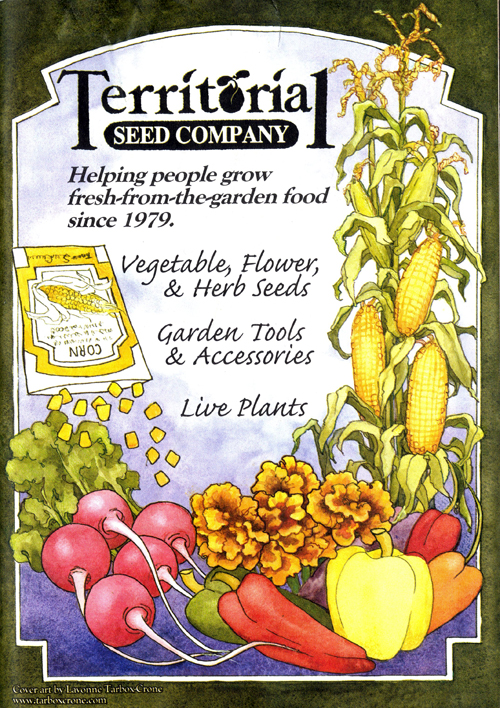
If you have a vegetable garden, get your copy of the Territorial Seed Co. catalogue.

Since 1979, Territorial Seed Co. has been supplying Northwest gardeners with high quality seeds chosen specifically for our climate. The huge selection of tomatoes, for instance, is not only extra tasty, but also chosen for their shorter than average ripening period. As Territorial Seed Co. has grown, so has their selection of seed potatoes, garlic starts, and live plants. The Territorial Seed catalogue is the foundation of a successful vegetable garden in the Northwest.

If you love gourmet cooking, there is no better seed catalogue than Renee’s Garden Seeds. Renee Shepherd is often credited with bringing international gourmet varieties to the home gardener. This company’s incredible selection of herbs, vegetables, and heirloom flowers is a treat not to be missed.

Both Territorial Seed Co and Renee’s Garden Seeds subscribe to the Safe Seeds Pledge. Rigorous testing at Renee’s Garden Seeds trial grounds in Felton, CA and Territorial Seed Co.’s trial grounds in Cottage Grove, OR ensures that you’ll be buying seeds with high germination rates.

Hard-core vegetable gardeners look forward to spending winter nights reading the Johnny’s Selected Seeds catalogue. As much a gardening handbook as a seed catalogue, Johnny’s features advice on everything from heirloom seeds to hardiness zones and season extenders. Like Territorial Seed Co. and Renee’s Garden Seeds, Johnny’s Selected Seeds maintains extensive trial grounds where they grow and test the seeds they sell. Johnny’s Selected Seeds is located in Maine, and although the climate and growing season is different than the Puget Sound’s, many of the short season varieties Johnny’s offers do very well in Seattle gardens.

SEED STARTING SUPPLIES

Most nurseries and garden stores carry a selection of starter trays, flats, seed starter mixes, peat pots and pellets, and inoculants.

Environmentally concerned gardeners turn to biodegradable growing supplies, instead of plastic pots, whenever possible. They also reuse plastic inserts and flats from season to season. Great idea! However, be aware that soil borne pathogens can live for a very long time in used pots – so wash them thoroughly in warm water and a mild bleach solution.

Peat pots and pellets are a well known sight in any garden store. What is less well known is the impact of peat harvesting on the environment. Peat bogs are an important wetland resource. Most bogs are not in danger of depletion, but the use of highly acidic peat in already acidic Northwest soils is not the ideal seed starter. If you want to conserve peat bogs and lime, there are plenty of natural and biodegradable alternatives.

Cow Pots are safe, clean, and biodegradable. They are made from thoroughly composted cow manure. As you might expect, there is no danger that we’ll run out of manure any time soon… so Cow Pots make an excellent – and environmentally sound – replacement for peat pots. You can buy them online if they are not available from your local nursery.

Seedlings are highly suscepible to a disease known as “Damp Off.” The warm,moist environment essential for seed germination is also the perfect breeding ground for fungus diseases like Damp Off.

This is why there is no substitite for a sterile seed starting mix.

Seeds germinate best in lightweight soil that holds water and nutrients. Don’t let all the time and effort you put into your seeds be lost to save a few pennies on seed starting mix. Read the ingredients and buy the best seed starter you can find. Your favorite seed catalogues will either sell a commercial mix or offer a recipe for making your own.

16 Dec 2009

Pets and Plants During The Holidays

Enjoying The holidays
Enjoying The Holidays

Have you heard that many holiday plants can be toxic to pets?

The danger is real, but, fortunately, it is often exaggerated.

Poinsettias, holly, and mistletoe all pose some threat to pets. All are toxic in large doses. But for most pets, most of the time, the result of eating your Christmas centerpiece is more likely to be a trip to the dog house rather than a trip to the vet.

Here’s what you need to know:

Poinsettias: The danger from Poinsettias has been greatly exaggerated. The plant has lost most of its toxicity through hybridization. However, this does not mean that poinsettias are edible! The sap from the plants is an irritant.

Symptoms: Excessive salivating, pawing at the head, vomiting

Treatment: Wash off the irritating sap. If your pet’s eyes are irritated or inflamed, or if your pet is vomiting, you may need to call your vet. Some dogs and cats need a medication to calm the irritation.

Holly: The berries are attractive to pets, but they can be poisonous in large quantities. Sharp holly leaves can also cut your pet.

Symptoms: Upset stomach. If your pet is vomiting or has diarrhea, there is a danger of dehydration and electrolyte imbalance.

Treatment: If your pet ate only a few berries, there is probably no danger. However, if you suspect that your pet ate lots of berries, call your vet.  The vet may prescribe IV fluids to treat dehydration.

Mistletoe: (American mistletoe is less toxic – and much more common in the US – than European mistletoe) Pets are most likely to eat the berries, which are poisonous. If your dog or cat eats a large quantity of mistletoe berries, it may become very ill. A few berries produce only mild stomach upset – but lots of berries can be dangerous.

Symptoms: Animals suffering from mistletoe poisoning may show any of these symptoms: hyper-salivating, vomiting, diarrhea, excessive urinating, increased heart rate.  As with holly, if you suspect your pet ate a large quantity of mistletoe berries, call your vet immediately.

Remember: “large quantities” of a toxic plant is a subjective measurement. The size of your pet, its age and overall health, and its sensitivity to environmental irritants all need to be considered. What would seem like “a few” berries for an adult Golden Retriever could be a toxic amount to a cat.

If you are at all worried about your pet’s symptoms, call your vet and follow directions.

Photo by Gabbcan Released under Creative Commons License

13 Dec 2009

Feeding Birds in Winter

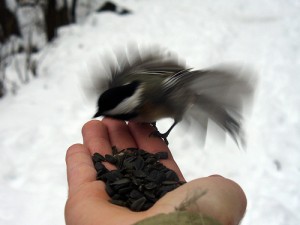
Feeding a chickadee
A Black-capped chickadee attracted by sunflower seeds

Birds are an essential part of any garden. They aid in insect control and they add beauty and sound to your landscape.

You can attract birds by planting native flowers and shrubs and providing water during the growing season.

If you plant sunflowers and leave the heads to dry, they will be picked clean almost overnight by chickadees and finches (and squirrels). A birdbath or fountain will also bring in the neighborhood wildlife, year round.

Attracting and feeding birds throughout the summer will make it more likely that birds will find and visit your feeders regulaly in the winter.

In the winter, a bird feeder will give you a chance to watch and appreciate a variety of backyard birds when there is not much else to see in the garden. Black capped chickadees are common throughout Puget Sound, as are finches, Stellar’s jays, the cedar waxwing, woodpeckers, thrushes, sparrows, wrens, goldfinches, and more.

Some fear that feeding birds in the winter will keep them from foraging for food in warm weather. This is a myth. Birds use feeders to supplement their regular diet of insects, seeds, and berries.

Each wil have a preferred food, but you can please almost any combination of backyard songbirds with a combination of black oil sunflower seed, thistle, and suet.

The main requirement for winter bird food is that it is high in fat.

Birds need the extra calories for warmth and energy, especialy when their usual food sources are buried under snow. Birds have a very high metabolic rate, and in harsh weather, it is important for them to have ready sources of high energy food.

If you have a problem with squirrels at your birdfeeder, consider drawing the squirrels away from the feeder with a separate ground station filled with peanuts. The squirrels need to eat and they will not be easily deterred. “If you can’t beat ’em, join ’em” is a more effective squirrel strategy than sticky poles, squirrel guards, seed cages etc.  In fact, an ear of dried corn hung from a tree limb will entertain squirrels for hours, and the show will delight children and adults.

Photo by NatureFreak07 Released under Creative Commons License

09 Dec 2009

Frosty Lawns

CARING FOR YOUR WINTER GARDEN – PART 4

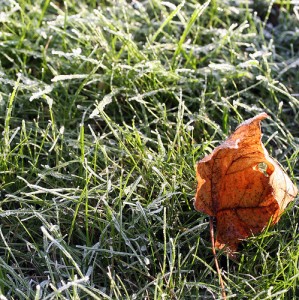
A frost coated lawn
A frost coated lawn

Is it safe to walk on a frosty or frozen lawn?

Generally, no. It is better to stay off grass that is frosty or frozen. Your weight can break the brittle blades of grass, driving ice crystals into tissue, which will damage – or even kill – the grass. Come spring, you may find dead patches in your lawn.

Grass that is damaged, but not killed, will be more susceptible to insect damage, moss, and weeds in the spring.

The best course, if possible, is to just stay off the grass until the sun melts the frost.

Even grass covered by snow can be damaged by heavy foot traffic, so be careful when building snowmen or making snow angels.

HOW SHOULD YOU CARE FOR TURF IN THE WINTER?

Grass usually survives winter without any special care.

During the short, cold days of winter, northern turf goes dormant. It stops growing and does not require mowing, watering, or fertilizing. Grass has a high sugar content, which normally acts as a sort of natural anti-freeze, allowing it to overwinter without protection.

You ensure green and healthy turf in the spring by caring for your lawn in the fall.

A good fall regimen for a healthy lawn will:

  • Fertilize with a good, slow release fertilizer that will encourage root growth, rather than top growth.
  • Rake up leaves and grass clippings
  • Top dress with compost
  • Add lime to sweeten the acid soil common in Puget Sound
  • Overseed bare patches

Remember – you are building strong roots and healthy soil. While this is a year-round goal, it is especially important in the fall. Your turf will not only survive the cold but will be thick and green come spring.

This post was Part 4 of a series.
Part 1: Caring For Your Winter Garden
Part 2: Frozen Ground
Part 3: Protect Your Pots

Photo by Xerones Released under Creative Commons License

05 Dec 2009

Protect Your Pots

CARING for YOUR WINTER GARDEN – PART 3

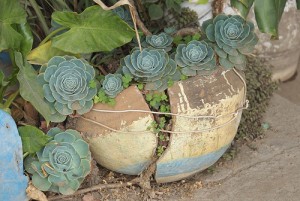
A Broken Pot Pressed Back Into Service

Sometimes it seems like winter is harder on pots than on plants.

If you have  pots – especially terra cotta pots – in your garden, you probably lose a few every winter.

Is there any thing you can do to protect them? Of course! But first, you need to understand why pots break. As with so many things in a Northwest garden, it’s not the temperature alone that’s the culprit – it’s the moisture.

Pots crack in the winter for one of two reasons:

  1. Terra cotta is highly porous. It absorbs and holds water, sometimes going weeks without drying out. When temperatures drop, this water freezes. As it freezes, it expands. The ice forming inside the clay eventually breaks the pot.
  2. Soil in a poorly drained pot becomes sodden. As the temperature falls, the water in the soil freezes. This causes the volume of material (soil, roots, and ice) to expand. Under pressure, the pot cracks.

PROTECT YOUR POTS

What can you do to protect your containers (and the sometimes large investment you’ve made in them)?

Unglazed terra cotta pots are most at risk for winter damage. Clay is highly absorbant and very brittle. Traditional clay flower pots are almost guaranteed to chip, crack, and break during a Northwest winter. To protect them, move the pots into an unheated garage or shed, or even under a deck out of the rain.

If the pots held annuals, and you plan to replant with new flowers in the spring, empty all the soil, and disinfect the pots with a mild bleach solution before storing them. Stack the pots upside down in a dry area for the winter.

Terra cotta pots that have been glazed only on the outside are as much at risk as their unglazed cousins. The glazing is mainly decorative. It does not protect the pot from the elements. Water is still trapped by the clay, with the same unfortunate outcome: cracked and chipped pottery after a hard freeze.

Containers that have been glazed inside and out have a better chance of surviving the winter – but the odds are still against it. Moisture can still build up in the soil or even through the bottom of the container (which is rarely glazed).

If you have decorative terra cotta containers and you want to be sure they make it through the winter – don’t leave them unprotected outside.

Concrete, plastic, and fiberglass containers are much sturdier than clay. They don’t attract moisture, and rarely experience frost or cold damage in the Northwest. New styles and colors make some of these pots – especially the fiberglass ones – every bit as attractive as traditional clay pots.

Don’t fight nature. If you want to leave your pots planted year round, avoid terra cotta.

This post was Part 3 of a series.
Part 1: Caring For Your Winter Garden
Part 2: Frozen Ground

Photo by A. Davey Released under Creative Commons License